
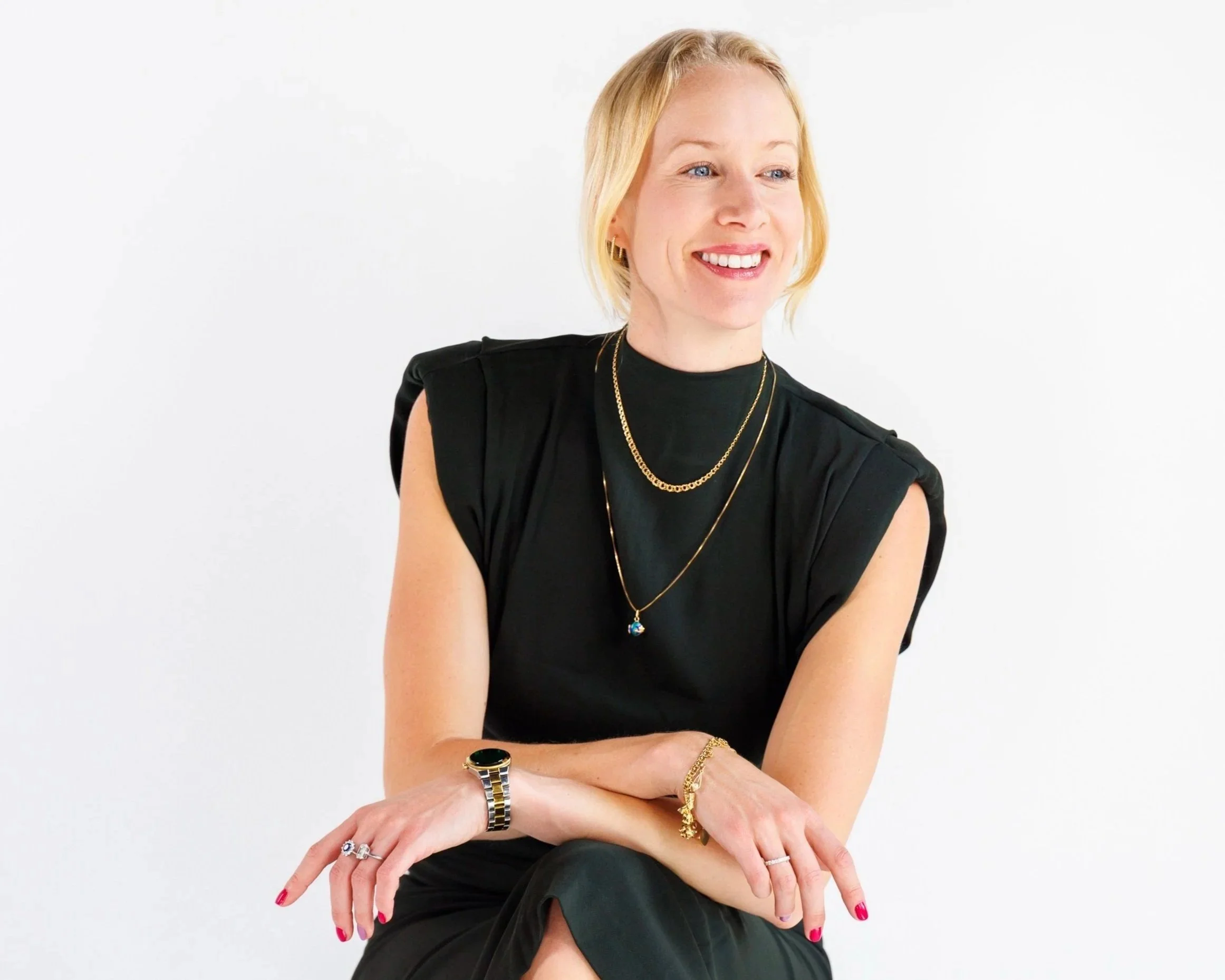
Before I learned to trust myself, I had to learn how to hear myself.
I don't coach because I have all the answers. I coach because I've lived the questions.
I know what it's like to look like everything is fine while quietly knowing something isn't.
For years, I became so focused on meeting everyone else's expectations that I lost touch with who I was. It mattered more that other people liked me than that I liked myself.
Looking back, maybe I wasn't searching for happiness. Maybe I was searching for myself.
That was the moment I admitted that I'd spent years building a life that looked good instead of one that felt true.
What followed — and what I still practise today — was learning to listen to myself, trust myself, and choose myself again.
I support people who have spent years meeting expectations, taking responsibility and holding things together, but who now feel called to live with more honesty, self-trust and inner alignment.
My work brings together coaching, emotional awareness, mindset, body-based practice and honest reflection.
Before becoming a coach, I built a corporate career and spent years working with people through boxing. Both experiences deeply shape the way I work today: clear, grounded, compassionate and practical.
What I discovered
During my own journey, there were countless moments that changed the way that I saw myself and the world.
One lesson that stayed with me:
Often, the greatest source of our suffering isn't our circumstances. It's the relationship we have with ourselves.
The more we abandon ourselves, the more disconnected we feel.
The more we trust ourselves, the more we begin to feel at home in our own lives.
What if there was nothing wrong with you?
What if you simply needed to stop leaving yourself behind?
You are not broken.
My role is not to give you a new identity. My role is to help you hear and see yourself more clearly, beneath the expectations, fears and beliefs you learned to carry.
Different expressions. The same pattern.
Overthinking. Burnout. People-pleasing. Perfectionism. Self-doubt. They may look like different struggles.
But often, they're different expressions of the same pattern: you've learnt to trust everyone else's voice more than your own.
Instead of asking "What do I need?" you ask "What will keep everyone else happy?"
Am I responding from fear or from love?
The more you recognise those two voices, the easier it becomes to choose what feels true to you.
Through Fear
Protect yourself. Please. Prove. Perfect.
We close. We protect, judge, control, blame or disconnect.
Through Love
What feels true?
We open. We become curious, compassionate, connected and more willing to meet reality as it is.
The way I work
My aim is to help you move from living on autopilot to living in a conscious relationship with yourself.
These six principles guide that journey.
Seeing clearly before trying to change anything.
Most of us don't realise we're repeating the same patterns in different parts of our lives. They feel so familiar that we mistake them for who we are.
The first step is slowing down enough to notice what's happening - your thoughts, emotions, body, and behaviours - without rushing to fix them.
Working with reality instead of fighting it.
Suffering often comes from resisting what already is. Acceptance doesn't mean liking your circumstances or giving up. It means seeing reality clearly enough to respond wisely instead of wasting energy arguing with it.
You can only change what you're willing to see.
Replacing judgement with understanding.
Rather than asking "What's wrong with me?" we ask "What makes perfect sense about the way I'm responding?"
Your reactions aren't random. They're adaptations that once helped you feel safe. As you begin to redefine what safety means, you no longer need to rely on the same protective patterns.
Changing the way you see your experience.
The situation doesn't always need to change. Sometimes what changes everything is the way you relate to it. Instead of seeing life as something happening to you, you begin asking "How can I work with this?"
Perspective creates possibility.
Putting your energy where it can actually create change.
Not everything is within your control. But your attention, your choices, and the way you respond are.
Real freedom begins when you let go of trying to control everything outside yourself and start leading what is inside your control.
Learning to become someone you can rely on.
Self-trust is built by learning to have your own back. Every time you listen to yourself, honour your values, or choose what feels true - even when it's uncomfortable - you make a deposit into that relationship.
Think of self-trust like a bank account. Every time you show up for yourself, you make a deposit. Every time you ignore what you know to be true, you make a withdrawal. Over time, those small daily choices determine how much you trust yourself.
What clients say
If this resonates...
You don't need to have your life figured out. You don't need to know exactly where to start. You simply need the willingness to be honest with yourself.
I'd love to walk that journey with you.